




The Deep Culture Behind the Double Ninth Festival
Each year, on the ninth day of the ninth lunar month, families climb to high places together, gazing out over mountains and rivers, wearing sprigs of dogwood and sipping chrysanthemum wine. This is the Double Ninth Festival—a celebration carried on unbroken across thousands of years.
A Custom Handed Down by an Immortal
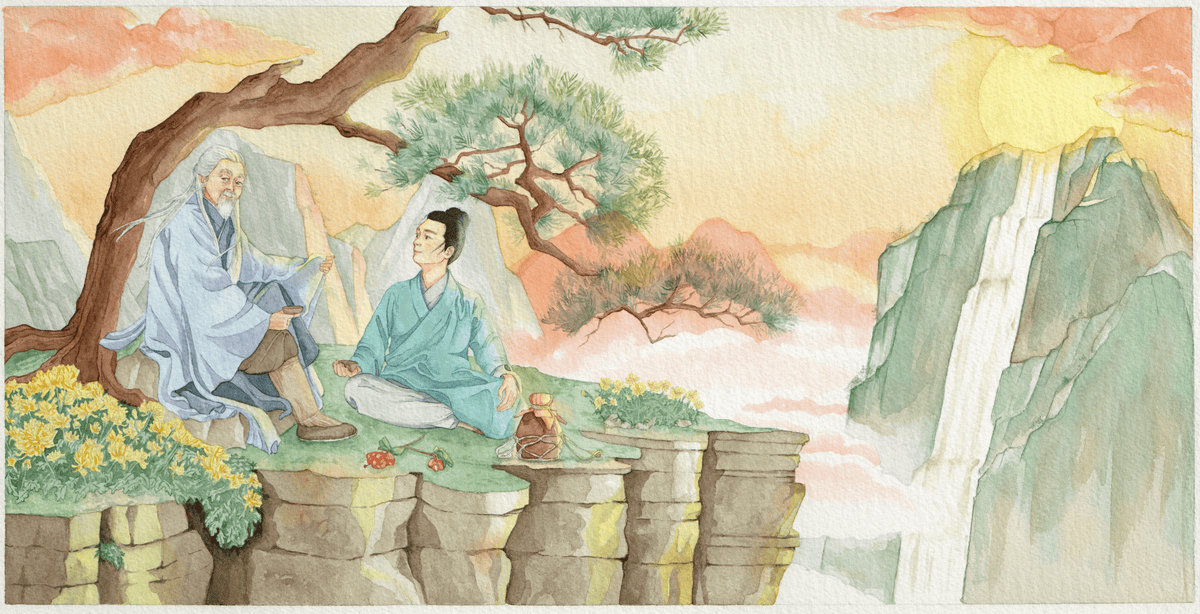
In the Eastern Han Dynasty (25-220 AD), a man named Huan Jing from Runan studied the Dao under his master, Fei Changfang. One day, Fei Changfang told him: “On the ninth day of the ninth month, a great disaster will fall upon your household. Have each member of your family bind a crimson pouch of dogwood to the arm, climb to a high place, and drink chrysanthemum wine—and then the calamity may be avoided.”
Huan Jing did exactly as he was told and led his whole family up the mountain. When they returned at dusk, they found the chickens, dogs, cattle, and sheep at home had all suddenly perished. A plague had swept through the village, and he and his family had been spared by climbing high. Our Double Ninth customs today—wearing dogwood, drinking chrysanthemum wine, and climbing to a high lookout—come from this story.
Earlier still, during the Spring and Autumn and Warring States periods (475-221 BC), "climbing the mountains to pray for blessings" was already a custom. To ascend a height was both a way of "bidding farewell to the green" and welcoming a new season. The ancients also believed that the light, clear yang energy rises upward while the heavy, turbid yin energy sinks below. To climb a high mountain in autumn meant breathing in fresh, clean air and keeping away from the turbid air—a benefit to both body and spirit.
During the Tang Dynasty (618-907 AD), the famous poet Li Bai wrote a poem on the Double Ninth Festival about drinking chrysanthemum wine: "On the ninth day we drink on Dragon Mountain; the yellow blossoms smile and chase the exiled minister. Drunk, he watches the wind take his hat; dancing, he loves how the moon keeps him from leaving." For a moment, all his troubles of the court and the cares of the world dissolved with the fragrance of the wine. The Shen Yun stage program Li Bai Intoxicated brings to life this magical moment during the Double Ninth Festival—and includes Li Bai having a divine encounter while drunk.
The Double Ninth, the Double Yang
The other name for the festival "Double Yang" (Chongyang) carries the ancients' understanding of the order of heaven and earth. The Book of Changes designates "nine" as a yang number; on the ninth day of the ninth month, two nines overlap, sun and moon both stand in yang, and so it is called "Double Yang."
Its earliest roots reach back to the ancient Chinese belief in the unity of heaven and humanity. In the ninth month, when the crops were gathered in, the ancients offered sacrifices to the Heavenly Emperor and to their ancestors—an autumn harvest rite. The "Great Fire" star (Antares), a marker of the seasons, withdraws in the late autumn of the ninth month. The retreat of this star signaled the coming of the long winter, and so the ancients held a corresponding rite to send it on its way.
Because "nine-nine" sounds like "ever and ever," the Double Ninth has long carried the meaning of longevity, and in later ages it grew into a "Festival for Honoring Elders," holding the people's wishes for the health and long life of their elders. Emperor Dezong of the Tang named it one of the "Three Decreed Festivals," making it an official holiday. To this day it still carries the tradition of warmly honoring elders and remembering those who came before.
The Double Ninth Festival has endured unbroken for thousands of years, perhaps precisely because it is more than a day for enjoying the autumn. In the moment we climb high and gaze into the distance, what we inherit is the ancients' reverence for heaven and earth, their respect for their elders, and an ancient wisdom passed down from the divine.
This ninth day of the ninth month, why not gather a few close friends and climb high to enjoy the autumn together. In the crisp autumn wind, share the story of how this festival came to be and let that beauty and goodness, passed along over five thousand years, continue to flow forward through you.
Watercolor by Mirage for Shen Yun Collections
You May Also Like




Leave a comment


