From the Heavens Came Silk
There is a fabric unlike any other—natural, luminous, and deeply sacred. For over five thousand years, it has connected humanity to a civilization believed to have been bestowed by the divine.
More than a textile, silk inspired one of history’s greatest trade routes. The Silk Road united East and West, allowing philosophies, spiritual beliefs, artistic traditions, scientific discoveries, and cultural treasures to travel across continents. Few threads have woven themselves so profoundly into the story of civilization.
This legendary material is silk.
Leizu, the Goddess of Sericulture
According to ancient Chinese tradition, the earliest people clothed themselves in feathers and animal skins until enlightened sages introduced woven fabrics made from silk and hemp. These textiles brought dignity to daily life, solemnity to sacred ceremonies, and reverence to funeral rites. Silk was never regarded as an ordinary cloth. It was believed to carry prayers heavenward and was reserved for the most sacred moments of human life.
Ancient texts such as the Huainanzi credit Leizu, the principal consort of the Yellow Emperor, as the founder of silk culture. Legend tells that while enjoying tea in the imperial garden, a silkworm cocoon drifted into her cup. As she lifted it from the hot water, it unraveled into an impossibly long, smooth, and shimmering filament. Through this simple moment of observation, she discovered the secrets of sericulture and silk weaving.
Another classical account describes how, after the Yellow Emperor defeated Chiyou, the Silkworm Deity descended from heaven and presented celestial silk. Leizu transformed these heavenly threads into garments that reflected the harmony of Heaven and Earth, offering them as a model for all under heaven.
For thousands of years, Leizu has been honored throughout China as the Goddess of Sericulture. Although later folklore introduced other legends surrounding the origins of silk, she remains the earliest and most revered figure in the sacred history of silk.

The Spiritual Meaning of the Silkworm
The ancient Chinese worldview embraced the principle of harmony between Heaven and humanity. Civilization itself was regarded as a divine gift, and nearly every traditional craft was believed to have heavenly origins.
Within this tradition, the mulberry tree, the silkworm, and silk formed a sacred bond linking Heaven, Earth, and humankind.
The silkworm’s remarkable life cycle—egg, larva, chrysalis, and moth—became a profound symbol of birth, transformation, mortality, and renewal. Ancient scholars saw within it reflections of life’s deepest mysteries and the soul’s eternal journey.
Silk itself was believed to possess spiritual significance. The Book of Rites records that rulers maintained sacred mulberry groves and silkworm houses specifically for ceremonial purposes. During antiquity, silk garments were reserved primarily for sacrificial rites and funerals, honoring both the divine and the departed. Those nearing the end of life were often clothed in silk, symbolizing the soul’s peaceful return to Heaven and Earth.
Through countless generations, mulberry, silkworm, and silk became enduring symbols of Chinese civilization, carrying not only artistic beauty but also humanity’s search for meaning and spiritual enlightenment.
The silk scarves of Shen Yun Collections draw their inspiration from this sacred heritage.
Crafted in Como, Italy
Every Shen Yun Collections silk scarf is meticulously printed in Como, Italy.
Nestled on the shores of Lake Como, this remarkable city has cultivated one of the world’s finest silk traditions for centuries. Renowned for exceptional craftsmanship, masterful printing techniques, and uncompromising quality, Como remains the destination of choice for many of the world’s most prestigious luxury fashion houses.
From the ancient Silk Road that first connected civilizations to the master artisans of modern Como, this delicate yet resilient thread has continued to carry culture, artistry, and beauty across time.
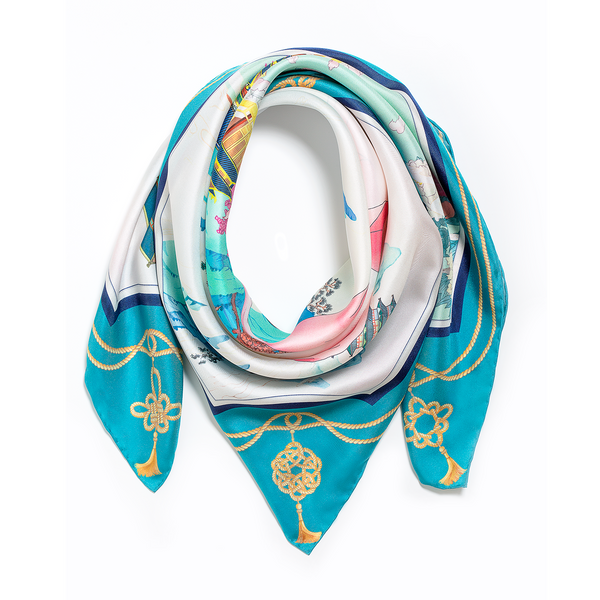
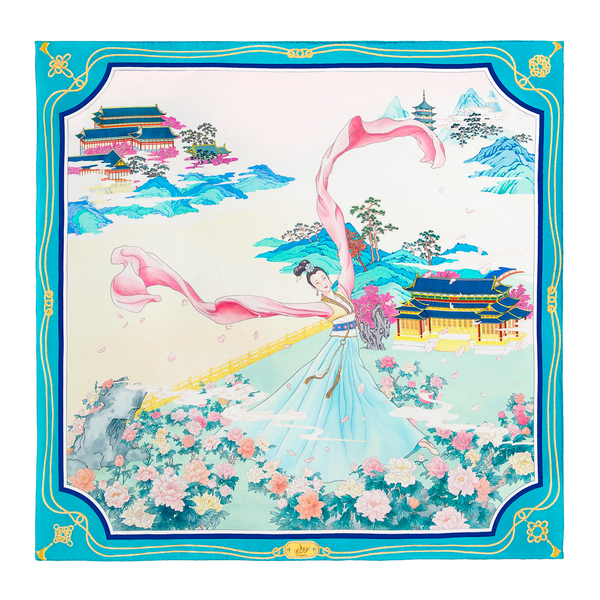
When the celestial landscapes, graceful dancers, blooming peonies, and timeless motifs of Shen Yun Collections meet the extraordinary craftsmanship of Como, silk becomes more than an accessory. It becomes a work of art—a treasured bridge between East and West.
Italian Craftsmanship, Woven to Perfection
Every silk scarf from Shen Yun Collections is exquisitely printed in Como, Italy, a lakeside city whose centuries-old silk tradition has made it one of the world’s foremost centers of fine silk craftsmanship. Renowned for its masterful printing techniques and uncompromising quality, Como remains the destination of choice for many of the world’s finest luxury silk houses.
From the ancient Silk Road that united Eastern and Western civilizations to the master artisans of Como who continue to perfect their craft today, this slender yet enduring thread has always carried the legacy of culture, artistry, and beauty. When the celestial landscapes, graceful florals, and classical artistry of Shen Yun Collections are brought to life through Como’s unparalleled silk craftsmanship, each scarf becomes far more than an accessory—it becomes a timeless work of art, bridging cultures, generations, and civilizations through the enduring language of silk.
You May Also Like
Leave a comment