

A Thousand Years in a Cup: The Elegance of Chinese Tea Culture
Across the vast current of China’s 5,000-year civilization, tea has never been just a daily beverage. It has been a companion to wisdom and the symbol of a cultivated life.
Legend holds that in remote antiquity, the Divine Farmer (Shen Nong), was sent down to Earth to bring about a rich cultural tradition for humankind. He tested hundreds of herbs in order to discover those that could heal the people. Each day he encountered seventy-two poisons, but tea would cleanse and revive him. Thus, tea came to be seen as a gift from Heaven—a powerful herb capable of harmonizing the organs and clearing the mind of his torments. This myth not only marks the origins of Chinese tea culture but also illustrates the unity of tea, medicine, and the heavenly Dao.
As Chinese civilization developed, the role of tea grew ever more significant. In Daoist practice, tea was valued as an aid to finding tranquility and stillness. It helped Daoists to calm the breath and quiet the mind, putting them in harmony with nature. In the Buddhist tradition, it was said that “one can glimpse Buddha nature in a single cup” since the purity of tea washes away worldly dust. Confucian scholars, too, honored tea as a medium for self-discipline and civility, weaving it into rituals of respect and the cultivation of a virtuous character.
To ancient literati, tea was more than refreshment—it was a companion in poetry, calligraphy, and contemplation. Whether sipping beneath the moon or sharing a cup beside flowing water, they found in tea a friend and a means of connecting with the universe. Lu Yu’s Classic of Tea, written in the Tang Dynasty, pioneered the study of tea, elevating it from a craft to a refined path of philosophical and artistic pursuit. Each rising swirl and falling stillness in a cup reflects the order of Heaven and Earth and the quest for inner clarity.
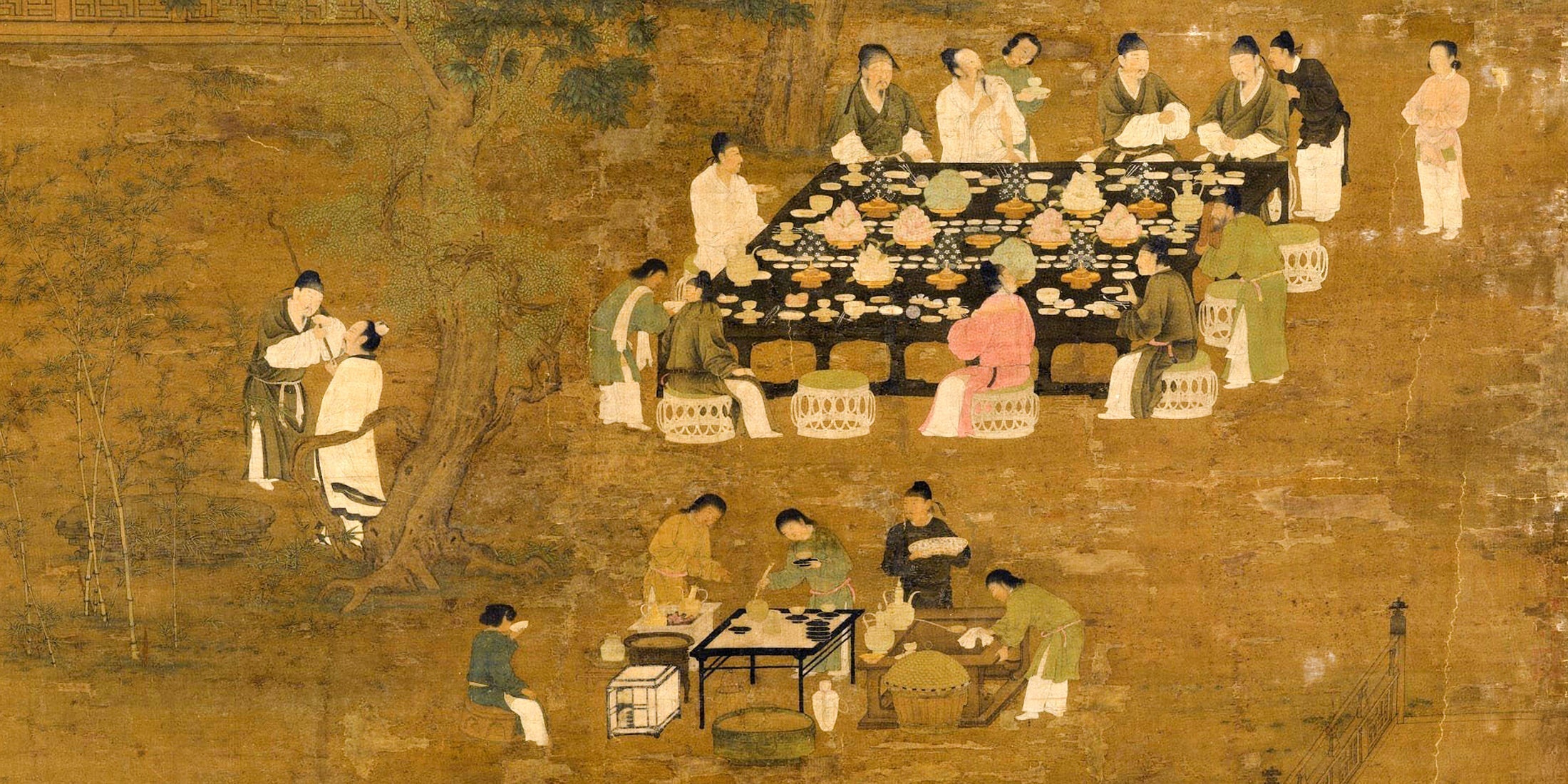
(Image source: NPM)