The Legendary Fiber that Still Unites the East and West
James White & Evan Mantyk, Contributing Writer
There is a natural fiber so strong and with such a rich legacy that it seems to connect 5,000 years of human culture together. That fiber is silk—a once legendary material that was so valuable it opened up the most significant trade route in human history.
 (Silk Road Landscape Map. Credit: NPM)
The Silk Road bridged the East and West, spreading spirituality, tradition, values, technology, and culture. Like the threads of destiny woven by the Fates of ancient Greek mythology, silk has played a significant role in shaping human existence, interweaving time, space, and vastly different cultures together.
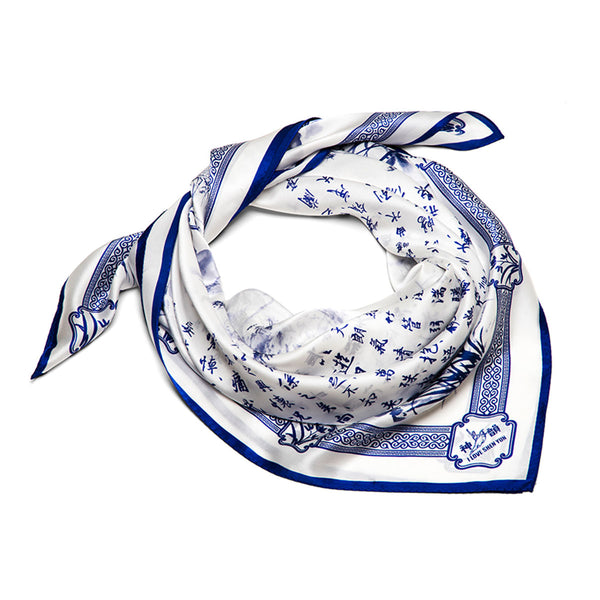
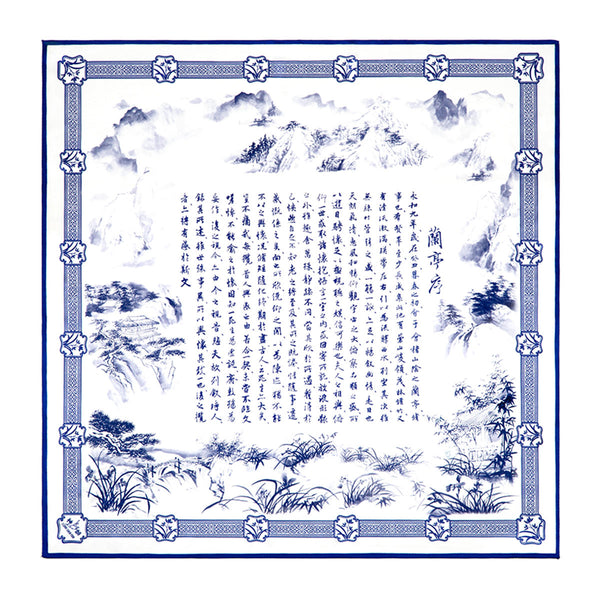
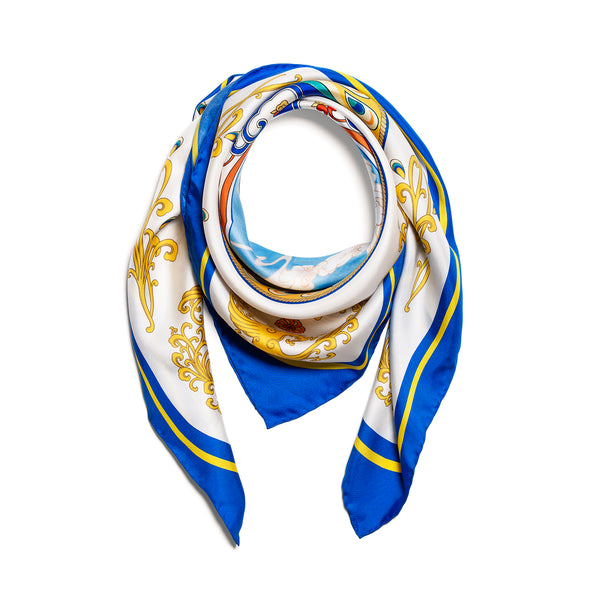
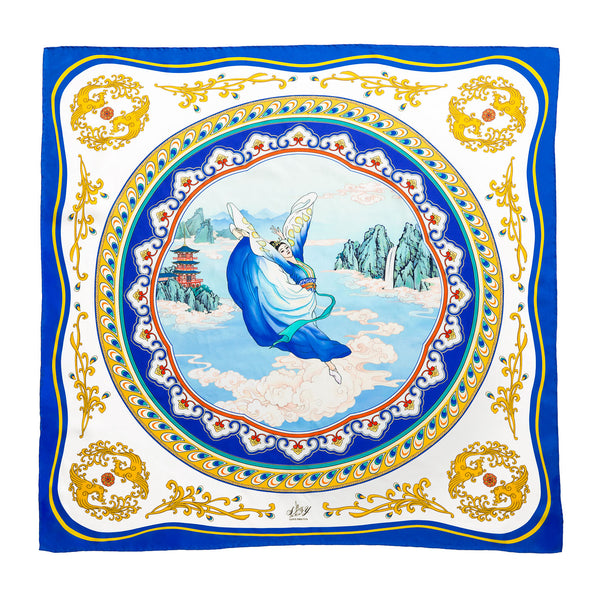
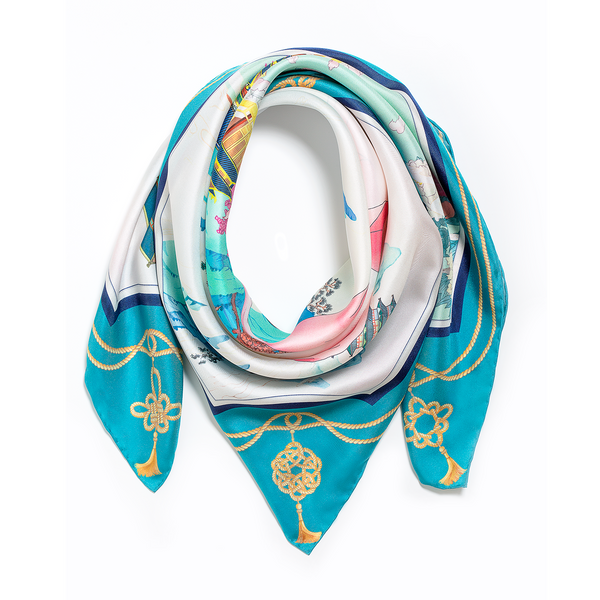
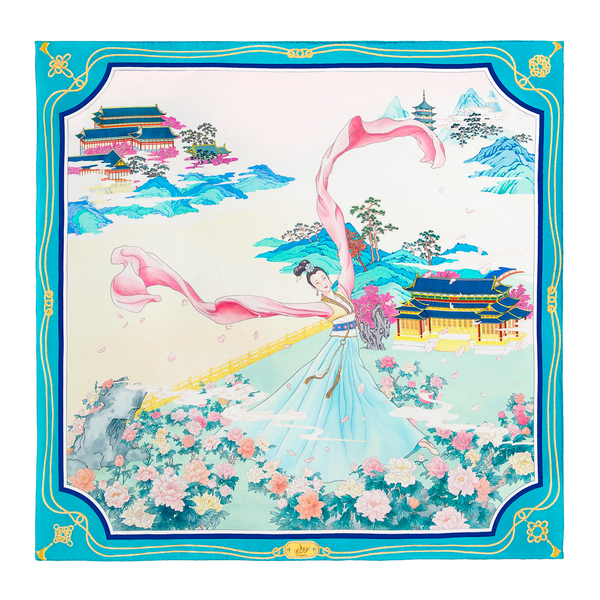
Shen Yun Collections' enchanting collection of silk scarves allows you to wrap yourself in silk's rich legacy, timeless traditions, and an angelic beauty that will never age.
A Goddess's Creation
It all began nearly 5,000 years ago when Empress Leizu was enjoying her afternoon tea. In a gift of fate, a silkworm cocoon fell into her warm tea cup and began to slowly unravel. Enchanted, Leizu played with the lovely thread, wrapping it around her finger, mesmerized by its paradoxical softness and strength. She continued to unwrap the silk until it stretched across her garden. At the end of the silk, she found the silkworm responsible for spinning this magical thread.

Leizu persuaded her husband, the Yellow Emperor, to plant a grove of mulberry trees, where she could domesticate silkworms and make this precious fiber. She invented the first silk reel, which joins the fine silk filaments into a fiber strong enough for weaving. She then developed the first silk loom to weave those threads into textiles for clothing, and even paper. Leizu has been revered throughout history as the Goddess of Silkworms, and the Yellow Emperor is believed to have practiced self-cultivation, eventually ascending to Heaven as an immortal.
Mystical Qualities
Sericulture—the raising of silkworms to produce silk—hasn't changed much over thousands of years.
Silkworm cocoons are still heated in water, which loosens the silk to be collected. Each silkworm can amazingly create one kilometer of silk filament, which is spun together with more filaments to create a stronger silk fiber used for luxurious garments.
 (Chen Mei, Illustrations of Tilling and Weaving, Album: Bathing the Silkworms. National Palace Museum, Taipei. CC BY 4.0. © www.npm.gov.tw)
Though silk is smooth and supple, it's actually one of the strongest natural fibers in existence. By weight, it's even stronger than steel, and can be stretched to 40 percent of its length before breaking. Not only is silk soft and strong, but it naturally shimmers as light bounces off it, giving it a lifelike glow that dances off the fabric. These almost mystical qualities have distinguished silk throughout history, making it much more than just a fabric, but a symbol of high status, wealth, and culture, synonymous with the glory of China's ancient civilization.
Connecting the East and West
The secret to making silk was guarded by Chinese people for 3,000 years. The precious fiber was so highly valued, anyone caught smuggling silkworm eggs, cocoons, or mulberry seeds was sentenced to death.
With these strict laws in place, Chinese silk became one of the world’s most sought-after items, like gold. Ancient Romans, Greeks, and Egyptians were enamored with Chinese silk, and it became such an important textile it was even used as currency. The ancient trade routes linking China with the West later became known as the Silk Road for the lucrative trade of this precious material.

The Silk Road spanned 4,000 miles across China, India, the Middle East, Africa, and Europe. Merchants carried valuable goods and ideas back and forth between the two great civilizations of the time—China and Rome. Silk, paper, and gunpowder travelled West from China, and wools, “winged horses” (strong, fast horses excellent for battle), gold, and silver, among many other products, went East. Christianity and Buddhism also entered China via the Silk Road, illustrating the cultural, spiritual and ideological impact of these ancient routes.
Where Silk Found Its Second Home: Como, Italy
At the western end of the Silk Road stood the ancient Roman Empire, centered on the Italian peninsula—the same land we know today as Italy. The Silk Road may have come to an end, but the story of silk did not. Long after the caravans had passed into history, the precious fiber took root in northern Italy, on the shores of Lake Como, where it blossomed into a tradition that continues to flourish today.
Silk work was practiced across Italy as early as the year 1000, but Como's destiny changed around the 1400s, when Ludovico Sforza urged farmers to plant mulberry trees on a grand scale. The tree feeds the silkworm—Bombyx mori in Latin (Sforza himself came to be known as "the Moor" because of that name). Each spring, women and children gathered mulberry leaves to raise the worms whose cocoons would yield the thread. By the 18th century, spinning mills and weaving mills had risen throughout the region, and Como's craft became an industry.

What makes Como extraordinary today is not the quantity of its silk, but the mastery of its hand. Its printing works and silk mills are recognized for a quality of fabric found nowhere else, which is why the world's great fashion houses still travel to this small lakeside city to have their scarves and ties made. Como remains, quite simply, the finest place on earth to print on silk—where color is laid onto fiber with a precision and depth that only generations of accumulated skill can achieve.
That is why every Shen Yun Collections’ silk scarf is made and printed in Como. The heavenly scenes, celestial maidens, peonies, and flowing sleeves that Shen Yun brings to the stage demand a canvas capable of holding their radiance—luminous hues, delicate gradations, and edges as fine as a brushstroke. In Como, ancient Chinese artistry meets Italian craftsmanship at its highest expression, and the silk itself connects the East and West once more.

(Como, Italy. Credit: Wikipedia.)
Silk Today
Today, China continues to be the largest producer of silk. But where can you find products truly fitting the divine origin, ancient wisdom, extraordinary qualities, and historical brilliance of the fabulous fiber known as silk?
The Shen Yun enchanting collection of silk scarves allows you to wrap yourself in silk’s rich traditions and a beauty that will never age. We invite you to join the fabulous heritage of silk and carry it on your shoulders into a glorious future.
You May Also Like
1 comment
Love this thank you. I like ve the scarves too. I have one hopes to get another hopefully at San Luis Obispo show in may. Can’t wait!!
Leave a comment