


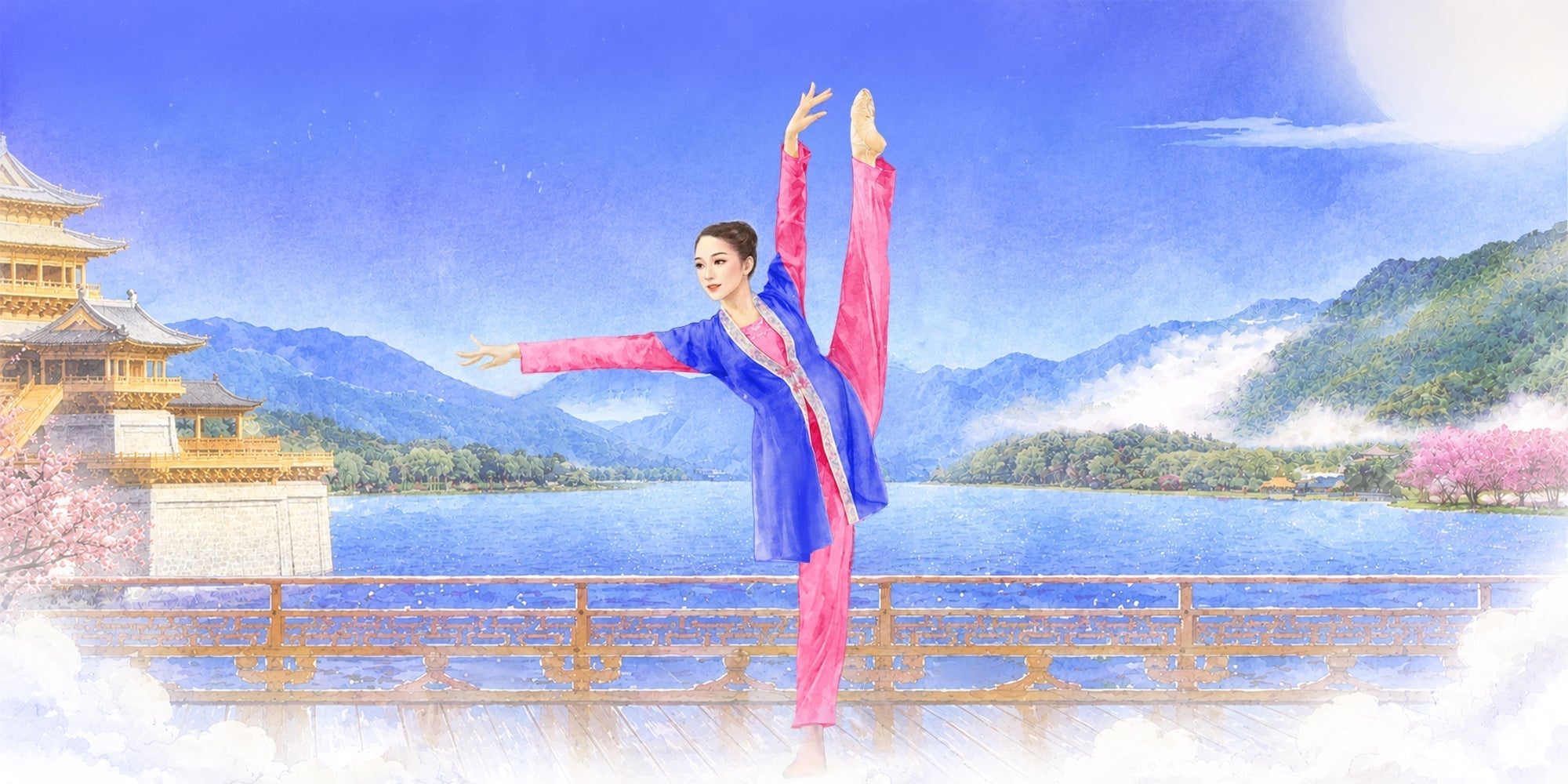


Hanfu: Divinely Inspired Beauty You Can Wear
Through its world tours, Shen Yun Performing Arts is reviving and celebrating not only classical Chinese dance, but also authentic Hanfu culture. The costumes featured on stage draw from the eras spanning the Three Sovereigns and Five Emperors period 5,000 years ago to the end of the Ming Dynasty in the 17th century. Through meticulously researched colors, fabrics, and styles, they bring back to life the dignified elegance of Chinese clothing culture.
Hanfu: A Treasure of China's Divinely Inspired Culture
Each dynasty had its own distinctive style, yet all embodied a shared spirit that respected clean lines, bold colors, and an exultation of the natural human form—believed to be the same form as gods in heaven. The term "Hanfu" originated as the name other ethnic groups used for the traditional clothing of the Han people—the main Chinese ethnic group. Hanfu ranks among the oldest national costumes in the world.
In traditional poetry, song, calligraphy, painting, martial arts, dance, the art of tea, and so on, Hanfu is always present and plays an integral part of the culture. Through its long history of inheritance and development, Hanfu has come to be synonymous with Chinese culture and therefore is often viewed as embodying the five Confucian virtues of kindness, justice, etiquette, wisdom, and faithfulness.
On the Shen Yun Stage
On the Shen Yun stage, this sartorial splendor of a grand civilization is brought back to life with dignity and grace.
Shen Yun's costume design perfectly integrates the defining features and aesthetics of traditional Hanfu:

Classic forms—Shen Yun faithfully presents Hanfu's signature elements: the cross-collar closing to the right; generously cut robes with wide, flowing sleeves; and sashes tied in place of buttons.
Dynastic variety—From the flowing skirts of the Han Dynasty and the elegant, long robe of the Tang, to the Manchurian gowns of Qing Dynasty princesses, Shen Yun showcases the distinctive charm of different dynasties and social classes.
The aesthetics of color—Shen Yun uses bright, richly layered palettes that evoke both celestial realms and the human world, in perfect harmony with the bright colors of the animated digital backdrop.
In performances, Hanfu is never merely a costume—it is part of the dance itself. Long sleeves, water sleeves, and flowing silk scarves unfurl with every leap and turn, creating the dazzling effect of “ribbons of color dancing across the sky.” The loose, generous cut also calls for poise and composure from the dancers, naturally bringing forth the reserved, understated grace of Eastern culture.

The Straight Collar and Parallel Lapels: Understated Elegance, Eastern Grace
Among the many collar styles of Hanfu, the zhiling duijin—straight collar with parallel, symmetrical lapels—stands out for its clean, balanced beauty.
The straight collar, also known as zhijin or “flat collar,” is an important collar design in traditional Hanfu. Its defining feature is a neckline that falls straight down from the neck. Unlike the cross-collar style, the two lapels do not overlap across the chest; instead, they hang parallel to each other in perfect symmetry.
Descending in a clean vertical line, the straight collar elongates the silhouette, creating a poised and graceful effect. Together with wide sleeves and tied sashes, it composes an overall air of ethereal, heavenly elegance.
This style appears frequently in ruqun (long robe) ensembles, the beizi jacket (and its short-sleeved counterpart, the banbi), the bijia vest, and other garments for both daily wear and formal occasions, flourishing especially in certain styles of the Song and Ming dynasties. Song society embraced Neo-Confucian philosophy, which advocated "preserving heavenly principles and restraining human desires" and upheld traditional, conservative moral values. Clothing accordingly turned away from opulence toward natural simplicity. The clean lines of the straight collar and parallel lapels became a visual expression of this very ideal: simplicity in appearance outside while cultivating oneself inside.
More than a way of tailoring, the straight-collared, parallel-lapel design is an outward reflection of inner character. Its straight, symmetrical lines mirror the ancients' pursuit of uprightness, equanimity, and inner refinement—within one’s attire there was implied a sense of self-cultivation.

The Hanfu Series: Carry the Beauty of Shen Yun with You
The Hanfu series of genuine leather bags from Shen Yun Collections translates this straight-collared, parallel-lapel Hanfu design—so often seen on the Shen Yun stage—into the silhouette of a handbag.
On the front of each bag, panels of supple leather are joined to form symmetrical lines flowing downward—a contemporary echo of the straight collar and parallel lapels. While never showy, it revealed cultural depth in every detail.
This series features soft, gently contoured shoulder bags in a relaxed, roomy silhouette, available in two styles:
The Hanfu Crossbody Bag—Light and graceful, carried by hand or worn over the shoulder: an elegant, effortless choice for every day.

The Hanfu Shoulder Bag—Clean lines and a more generous capacity: composed, refined, and quietly confident.

Each has its own charm, suiting women of different shapes and styles.
When a form refined over a thousand years is reinterpreted in genuine leather, culture is no longer a distant memory—it becomes an elegance that accompanies you, day after day.
You May Also Like


Leave a comment


